Manual quoting: the silent revenue killer
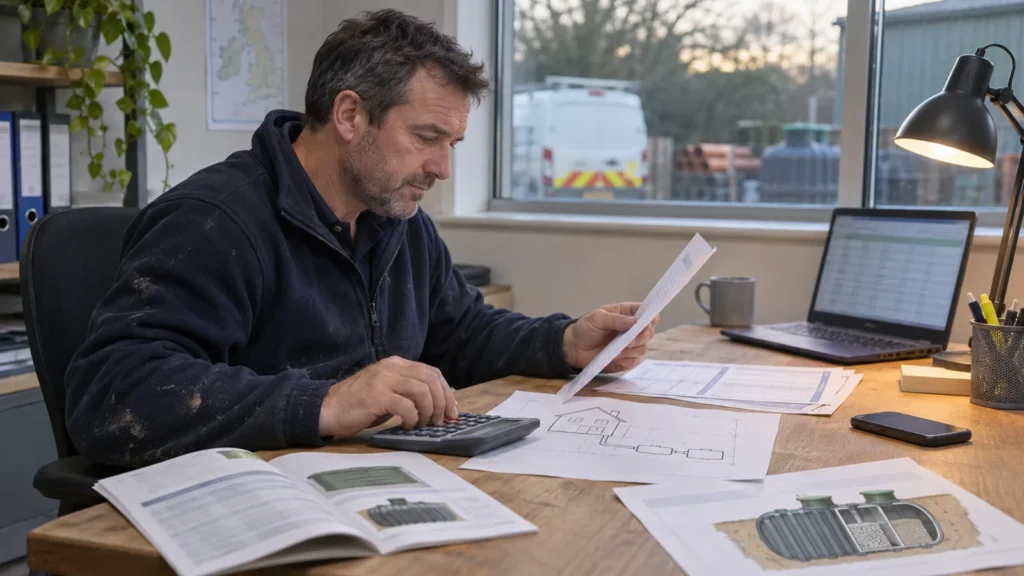
In the off-mains wastewater sector, an enquiry still triggers the same slow, manual chain reaction it did 20 years ago.
Someone needs a septic tank, a sewage treatment plant or a pump station. They reach out, and then the waiting game begins.
The problem: every estimate starts from scratch
Right now, producing a sensible figure means manually cross-referencing specs, thinking through ground conditions, checking the rules and chasing price lists. There is no single price and no agreed stage before the site visit, so the whole job waits for someone to find the time.
The cost: revenue leaves while the estimate sits in a queue
- Customers: are left in the dark, waiting days for a ballpark figure, so they book whoever replies first.
- Suppliers and installer networks: lose warm enquiries to slow turnaround, while burning hours on quotes that never convert.
- Builders’ merchant desks: get stuck as the middleman, bottlenecked by technical questions they do not have time to work through on a busy trade counter.
Sales data consistently shows that replying in minutes rather than hours raises your odds of winning the job. Yet in this sector, slow quoting is accepted as normal.
The solution: an estimation stage before the site visit
It was crying out for automation, so we built it. An estimation stage sits between the enquiry and the site visit. It captures the enquiry, qualifies it, suggests a suitable system, gives a provisional price and routes it to the right installer, all before anyone drives to site.
Then the installer takes over, as they always do: the site visit, the final system choice and the quotation. The estimate gets the enquiry moving. The survey makes it right.
The outcome: what changes when the bottleneck goes
- →For customers: a clear provisional price and a next step while their intent is high.
- →For suppliers and installers: faster replies, qualified enquiries, and technical teams freed up for installations rather than admin. The final system choice stays with the installer.
- →For builders’ merchants: trade counter staff can give a consistent provisional off-mains figure on the spot and pass the enquiry on, turning a tricky technical question into an easy merchant sale.
The off-mains sector does not need to be held back by spreadsheets and guesswork any more.
If you are a supplier, installer or merchant tired of watching good enquiries go cold while estimates sit in an inbox, see how it works. You may also want to read why a provisional estimate still needs a site survey and how automation helps with the last mile.
This article describes an approach. It does not report results from any live network.