Why a provisional estimate still needs a site survey
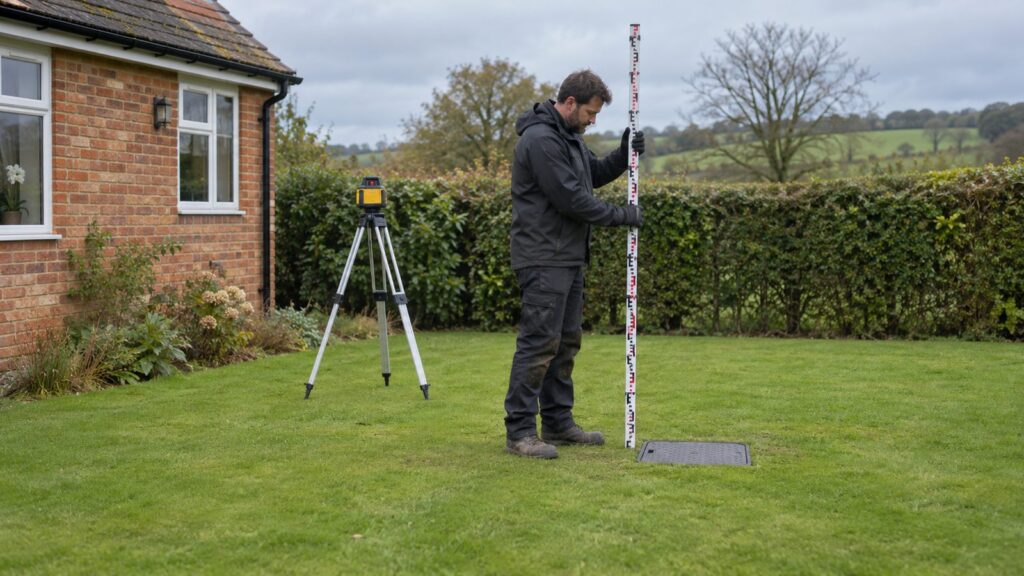
A provisional estimate gives a customer something useful early on: a rough idea of what a new system might involve and what it could cost. It is not a quote. This article explains what an early estimate is good for, and what an installer still needs to confirm on site before they can put a price in writing.
What an early estimate helps a customer decide
- Whether to go ahead. A range helps a customer decide whether the project is realistic for their budget and timing.
- Which type of system to ask about. It shows which options are likely to suit a property of that size and use.
- What to ask installers. A customer who has seen an estimate can ask better questions and compare approaches.
- When to plan the work. It helps with timing, for example around a property sale or a deadline.
What it cannot know
An estimate is built from what the customer can tell us. It cannot see the site. Several things that change the price can only be checked in person.
- How the ground drains, and how wet it is through the year.
- Where the existing tank, pipes and drains actually run.
- Whether a digger and vehicle can reach the working area.
- How close the work is to boundaries, buildings, trees and watercourses.
- Where treated water can go, and what the local rules allow.
- The condition of any equipment that is being kept or replaced.
- Power supply for any pumps or aerators.
The installer should confirm the proposed discharge route and check what approvals, if any, are needed for the property.
What the installer confirms before quoting
- That the information in the enquiry matches what is on site.
- That the chosen system is suitable for the ground and the space.
- The proposed discharge route, and what approvals, if any, are needed for the property.
- Access, digging conditions and anything that may add time or cost.
- What is included in the price and what is not.
How the two fit together
The sequence is simple. The provisional estimate comes first, so the customer can decide whether to take the next step. The survey comes second, so the installer can check the site. The installer can prepare a quote once they’ve checked the site and confirmed the scope. If the survey finds something different from the enquiry, the quote can differ from the estimate, and a good installer will explain why.
How a customer can help
Photographs of the garden, the access route and any visible tank covers all help. So does any earlier report, such as a buyer’s survey. They give the installer a better starting point for the survey.