Your initial estimate is a marketing opportunity
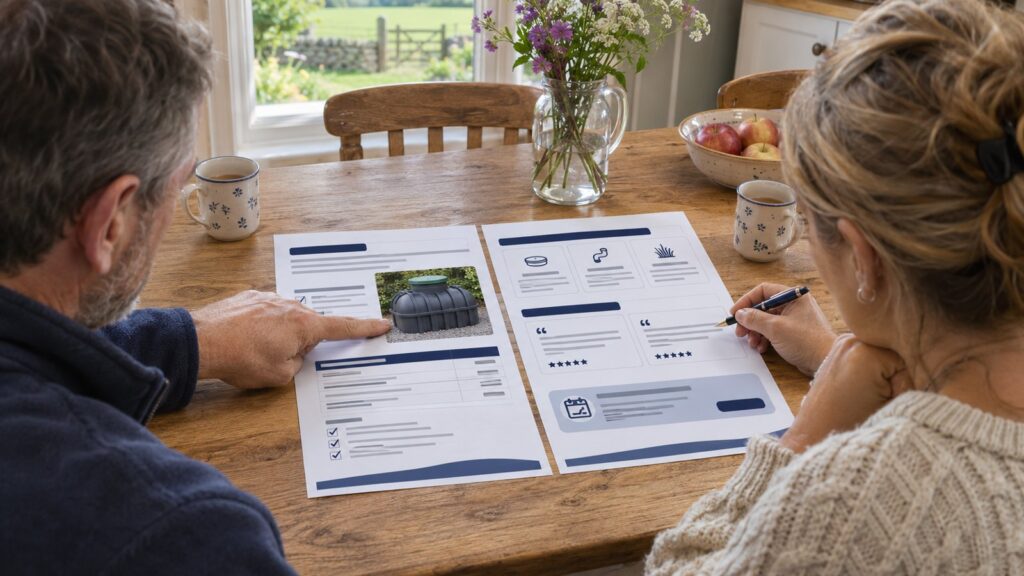
A homeowner opens an estimate to see what the work might cost. Once they have the figure, they have another decision to make. Do they call the installer, keep looking, or put the job off?
For most off-mains wastewater customers, the initial estimate is the first time they see a price, a system and a name. Treated as admin, it is a missed opportunity. Treated as marketing, it gives the customer a reason to make that call, and less reason to shop elsewhere.
This article sets out a practical view. It does not report results from any live network. Where it refers to the small mystery-shop study of UK off-mains wastewater firms (October and November 2026), the firms are anonymised, the sample is small and the figures are a dated snapshot.
What the customer is really asking
Most customers want a rough idea of price. They also want to see what they are likely to need. Whoever answers those two questions first gives the customer a reason to stay in the conversation.
Put the price and scope first
Show the proposed system, the provisional price, what it covers and what the survey still needs to confirm. A homeowner should be able to print the estimate, hand it to someone else in the household and have them understand what the figure means.
- Speed. It arrives while the customer is still thinking about the enquiry. In the study, web form replies took anywhere from 8 minutes to about 90 hours. These are single cases from a small sample, but they show how wide the gap can be.
- A rough price, with what it covers. In the study, three supplier replies gave prices. Two were supply-only and one did not say what the price covered. A price that states what it includes is easier to trust.
- A suggested system, with an image. Where the enquiry supports it, the estimate shows a suitable system from the supplier’s approved range, so the customer gets a visual idea of what they are likely to need.
- Why it was suggested. A short reason shows that the suggestion fits the property.
- What happens next. The installer’s survey, and what it will confirm.
Then use the second page to help the customer decide who to speak to and what to ask.
Give the installer a natural way to discuss extras
If the estimate proposes a supplier system such as a Klargester or GRAF, it can show the options approved for that particular model. A compatible alarm gives the installer a reason to explain how the homeowner would know if there was a fault. A maintenance plan starts a conversation about who will service the plant and what the annual visit covers. Where an insurance offer is available, the estimate can show who provides it and how to request a separate quote.
Label each item clearly:
- A required alarm belongs in the installation scope.
- An optional alarm can have its own one-off price.
- A maintenance plan can show its annual cost.
The homeowner can see what is included, and the installer has a reminder to bring up the options when they speak.
Give the homeowner a reason to call
Include up to three short, relevant reviews for the named installer. A review that describes how the installer handled a similar job tells the homeowner more than a row of stars. Add a short list of relevant services the installer offers, and put their phone number beside one clear next step, such as agreeing to a callback or booking a survey.
Why it matters for suppliers
The estimate puts the supplier’s name, range and images in front of the customer at the moment they are deciding. It is not an advertisement. It is a useful answer that happens to carry the brand. The installer still confirms the final system after the survey.
Why it matters for installers
An installer who can offer a clear first estimate is easier to choose than one who asks the customer to wait. The printed estimate keeps working after the homeowner has read the price. It shows who would do the job, what support is available afterwards and what to ask on the call. It also means fewer chasing calls for basic details, and a customer who arrives at the survey knowing what to expect.
What it should not do
- It should not read as a quote. It is provisional, and it says so.
- It should not hide its assumptions. It should state them.
- It should not guess when a key detail is unclear. That enquiry goes for review before pricing. Some enquiries, such as commercial and mixed-use sites, need review before an estimate can be prepared.
Questions to ask of your own estimate
- How quickly does a customer see it?
- Does it give a rough price and say what the price covers?
- Does it show a suggested system with an image?
- Are required and optional extras labelled, with prices?
- Does it say what the survey will confirm?
- Does it give the customer one clear next step, with the installer’s number beside it?
For more on how the estimate and the survey fit together, see Why a provisional estimate still needs a site survey and What a good installer enquiry looks like. If you would like to see how this could work for your network, request a walkthrough.